
Emergency Water Damage Restoration Near Me: What East Bronx Homeowners Should Do First
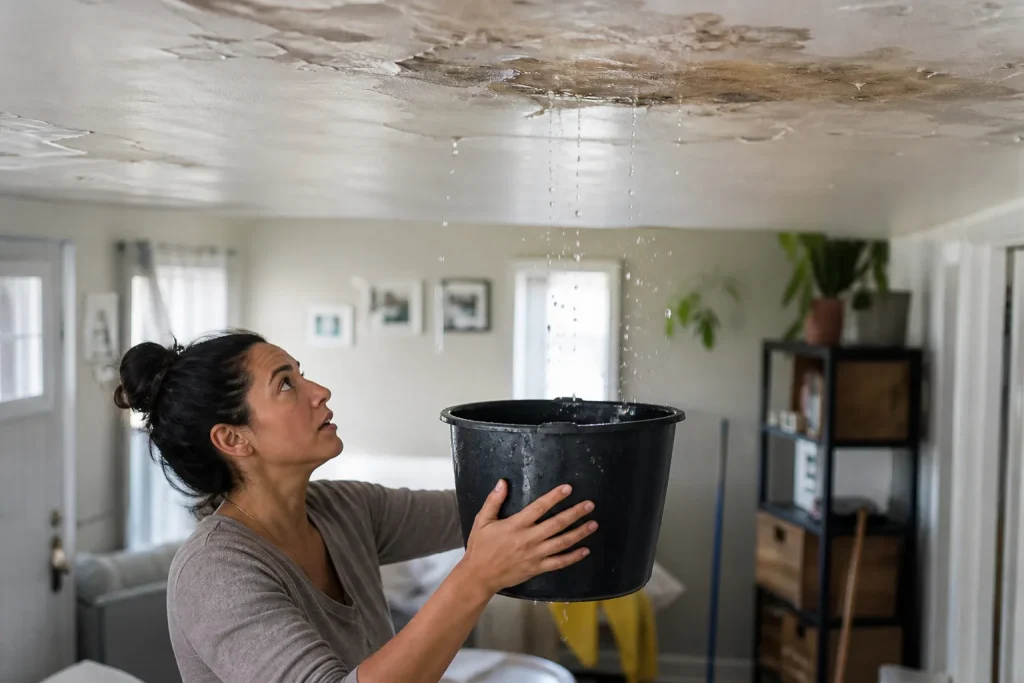
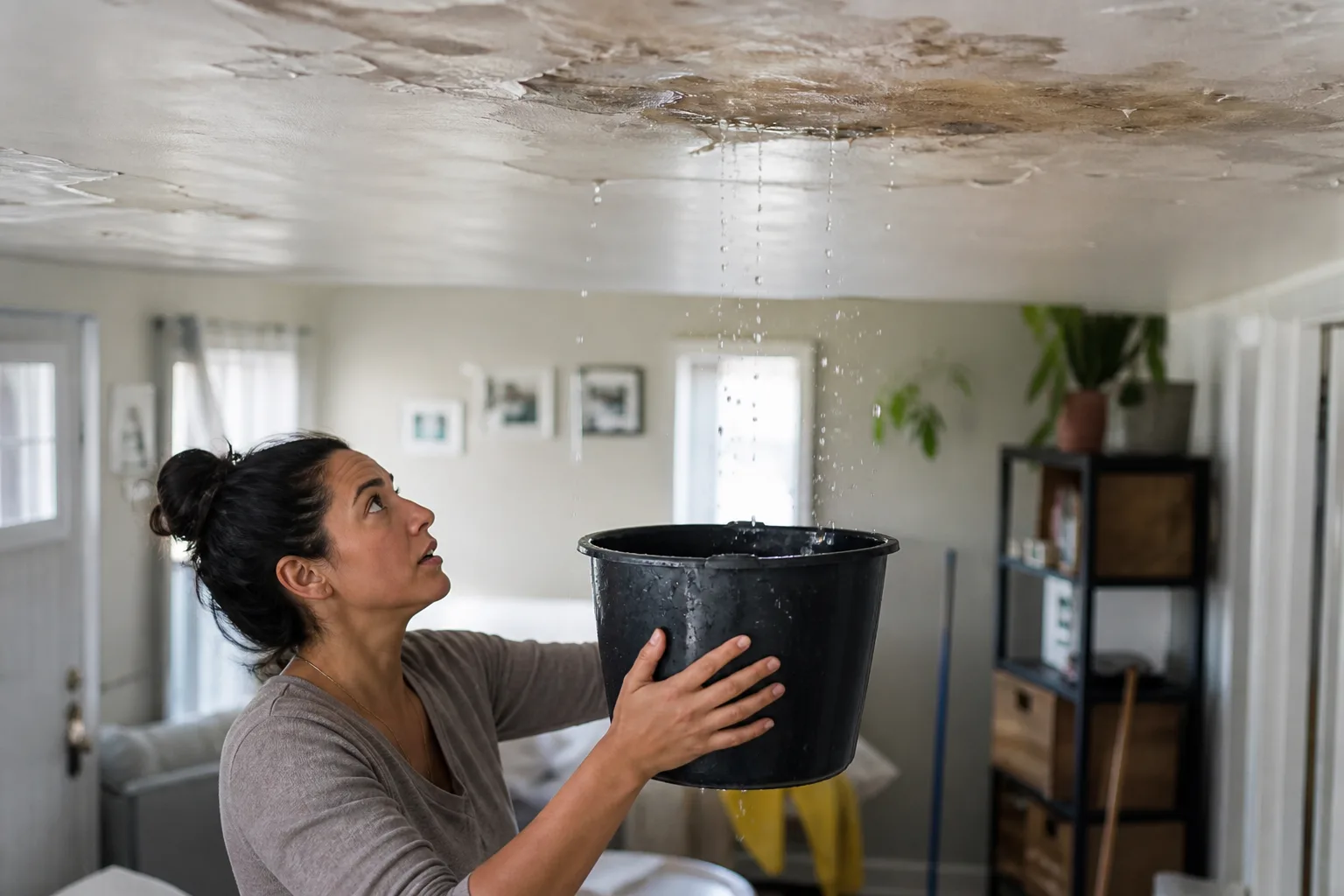
If you’re standing in water in an East Bronx row house or pre-war co-op right now, the first call is not to your insurer. It’s to your building super, your own two hands at the main shutoff, or 311 if the source is in a common line. The first 90 minutes decide whether this is a $2,000 dry-out or a $20,000 rebuild plus a neighbor’s liability claim. We’ve pulled kitchen cabinets off walls on Morris Park Avenue that were already swelling by the time the homeowner finished the insurance call. Get the water stopped, get the power handled, then call the carrier. If you’d rather not handle any of this yourself, call (607) 602-2791 and a live dispatcher answers, day or night.
The First 90 Minutes: What Actually Stops the Damage
Calling your insurer before stopping the water source is the single most common mistake East Bronx homeowners make in a flood emergency. It’s also the one adjustment companies later use to dispute “timely mitigation” clauses in your policy. Every policy we read in this borough has a clause about taking reasonable steps to prevent further damage. If a claims adjuster sees that the supply line kept running for 40 minutes while you were on hold, you’ve handed them a reason to reduce the payout. Here’s the correct sequence, in order:
- Stop the water at the source. In most Bronx row houses built before 1960, the main shutoff is in the basement near the front wall or sidewalk vault, a brass gate valve or lever ball valve. In pre-war co-ops, it’s often in a service closet off the hallway, not inside your unit. Know where yours is before anything happens. Tag it with a red zip tie if you must.
- Kill the electrical panel in the affected area. If water has reached outlets, baseboard heaters, or the panel itself, shut the breaker to that room. If the panel is wet or you can’t reach it without standing in water, don’t touch it. Call the super or an electrician. Water and a 120-volt circuit through a Bronx basement puddle is a fatal combination we don’t joke about.
- Document before moving anything. Take photos or video with your phone, wide shots first, then close-ups of the water line on drywall, baseboards, flooring. That line tells the carrier exactly how high the water went. Move furniture up on blocks only after you’ve shot the room. Photos taken before anything is moved carry far more weight in a dispute.
- Call your insurance carrier. Now, with the water stopped and the scene documented. Tell them you’ve mitigated the active source and you need a restoration company on site. Get a claim number. Then call us.
In Throggs Neck and Country Club, we regularly see basement sump failures drown finished rec rooms because the check valve failed silently. In Pelham Bay, cast-iron waste stacks behind kitchen walls crack with age and leak for days before anyone notices the baseboard swelling. Every neighborhood in East Bronx has its own failure pattern. What’s common to all of them is that time is the variable you control.
What to Tell Your Building Super vs. Your Insurance Carrier
These are two completely different conversations, and mixing them up is how homeowners lose hours. Your super needs to know what’s physically happening, right now, and what access he needs. Your carrier needs to know what caused it, when you noticed it, and what you’ve already done. Different information, different order, different tone.
To the super: “Water is coming through the ceiling of unit 4B, we think it’s the supply line to 5B, the shutoff for that riser is in the basement, please call the super of 5B and get the valve closed.” Give him the address of the leak, not the story of how you discovered it. He can’t fix the history. He can close a valve. If you’re in a co-op, the building’s line is his problem. If it’s your in-unit plumbing, it’s yours.
To the carrier: State the cause, the time you discovered it, the steps you’ve taken, and the fact that you have photos. “Burst supply line under the kitchen sink in my Throgs Neck co-op, discovered at 7 a.m., main water off, breaker off to kitchen, photos taken, claim number needed.” They want sequence, not narrative. The adjuster is trained to find inconsistencies. Give them clean facts and they’ll move faster.
Here’s the part most guides skip: if the leak originated in a neighbor’s unit or a common line, your carrier needs to hear that directly from you, in your first call, because the building’s master policy and the neighbor’s carrier will eventually be involved. The sooner the liability chain is documented, the less chance you’re left holding a bill while two carriers argue. In multi-family Bronx buildings, this is nearly half the water claims we handle. It’s also where a restoration company that bills your carrier directly saves you months of phone tag. That’s our standard practice at Water Damage Restoration in East Bronx, and it’s written into our scope before we start.
Shared Liability in Bronx Multi-Family Buildings: Protect Yourself in the First Hour
In a Bronx six-story pre-war, your leak is never just your leak. Water migrates down walls, along joists, under bathroom tile. What you see in your unit may be a fraction of what the family below you sees in theirs. If the damage spreads to an adjacent unit, you could be on the receiving end of a liability claim that your own carrier may or may not cover without a fight. Protecting yourself in the first hour isn’t just about your drywall. It’s about creating a record.
- Photograph the vertical extent. Water that starts on the fourth floor and pools on the third means the third floor isn’t asking you for money by accident. Document where the water was first visible in your unit and where it ended up.
- Notify the building management in writing. A text message with a timestamp counts. “Unit 5B kitchen leak at 7 a.m., water migrating to 4B ceiling, super notified.” That single line protects you when a neighbor claims you delayed.
- Ask the super to cut off common area power if needed. Hallway lights and shared outlets in still-damp walls are a building-wide hazard, not your solo repair.
- Don’t agree to anything verbal with a neighbor. Never say “I’ll take care of it.” Let your carrier talk to their carrier. Anything you say to a neighbor can become evidence against you. Be courteous, be helpful, and point them to the claim process.
We handled a job in Pelham Parkway last winter where a third-floor toilet supply line failed while the owners were at work. By the time they got home, water was running through the second-floor ceiling light fixture. The second-floor family’s first call was a lawyer. The right documentation in the first hour turned what could have been a six-month battle into a straightforward pair of claims. This is where Floodline Restoration Co. home services make the difference: our photo documentation is sent directly to both carriers, not just yours.
Red Flags in After-Hours Emergency Dispatch
At 2 a.m., when water is past your ankles and the carrier’s adjuster won’t answer until morning, the instinct is to call the first company that pops up on your phone and let anyone through the door. Slow down. The restoration business has a wide range of operators, from excellent to genuinely dangerous. Here’s what separates them in the first three minutes on the phone:
A live person answers. Not a message saying “we’ll call you back in the morning.” We answer the phone with a live dispatcher 24 hours a day, and we say who we are on the first ring. If you reach a recording at 2 a.m. in an emergency, you’ve already lost time.
They can tell you the name and certification of the tech coming. Ask one direct question: “What’s the name of the IICRC-certified technician who’ll be at my door, and can you text me his card?” A company that can’t answer that should not be let into your home at 2 a.m. You have no idea who you’re opening the door to. Our technicians are background-checked, uniformed, and trained to IICRC, RIA, and IFA standards. The name on the dispatch is the name on the truck and the name on the badge.
They don’t quote a price over the phone without seeing the job. No honest restoration company prices water damage sight unseen. What we do give you over the phone is a square deal: no surprises on the bill, a written scope before work starts, and direct billing to your carrier. If someone quotes you $299 “any job any size” at 2 a.m., keep them out of your house.
What “Emergency Stabilization” Actually Includes
This is where secondary damage, and secondary mold, most often starts. Many East Bronx homeowners assume the crew that shows up at midnight does the whole job. They don’t. Most after-hours dispatch teams do what’s called “emergency stabilization”: extract standing water, set up drying equipment, and stop the active migration. Then a different crew, sometimes from a different company, takes over in the morning. That handoff gap is where things get missed. Here’s what a proper stabilization should include, in order:
- Extraction. Standing water removed with professional-grade truck-mounted or portable extractors. If they’re using a shop vac, they’re not a restoration crew.
- Moisture mapping. A technician with a moisture meter, not a “feels wet” guess, takes readings from every affected wall cavity, floor, and baseboard and writes them down. You should see the numbers. We hand you a daily moisture log until the dry standard is met.
- Containment and drying set-up. Dri-Eaz dehumidifiers, Phoenix axial air movers, and Injectidry systems for hard-to-reach cavities. The equipment should be labeled, running, and logged.
- Antimicrobial application where needed. A light application on porous materials within the first 24 hours can prevent the secondary mold you’d otherwise be pricing out in three weeks.
- A written plan for the morning. What gets removed, what gets dried in place, what needs the adjuster’s sign-off. If the midnight crew can’t tell you the plan, you’re getting the handoff gap.
We run the same crew from day one to last moisture reading. The technician who maps your Throggs Neck basement at midnight is back the next day with the same Dri-Eaz and XPOWER equipment to take the next set of readings. The 90-Day Done Right Promise is tied to that continuity. If it’s not done right, we make it right. In writing. No arguing. That’s the Keystone Standard. It applies to emergency work the same as reconstruction. We pulled a water heater out of a garage over in City Island last month where a homeowner had already been told by another company that the slab was “fine.” His moisture meter reading through the luxury vinyl plank said otherwise. We dried it properly and the plank went back down. The other guy would have had him replacing the floor in six months.
What happens when you call
- 1
A real person answersNo phone trees - you reach a local pro.
- 2
You get an upfront price rangeHonest numbers before anyone is dispatched.
- 3
A background-checked tech heads outLicensed & insured, dispatched right away.
- 4
You approve before work beginsNothing starts until you say go.
How to Start When You’re Not Sure If It’s Even That Bad
Some water damage announces itself with a burst pipe at midnight. Some doesn’t. In East Bronx homes, the silent water losses are often worse. A slow leak in a second-floor bathroom supply line inside the wall can run for weeks before you see a stain on the living room ceiling. By then, the cavity is wet, the insulation is saturated, and mold is starting. Here’s what to watch for:
- Warped or cupped wood flooring that wasn’t warped last month
- A musty smell in one room that gets stronger with the windows closed
- Bubbling or soft drywall, especially near baseboards or under radiators
- Water stains on ceilings that grow between one weekend and the next
- Higher-than-normal water bills without an obvious cause
When to call a pro: if you see a stain that’s growing, or if you can smell dampness behind a wall, you need a moisture meter, not a guess. The professional-grade equipment we run daily, Dri-Eaz, Phoenix, XPOWER, and B-Air, reads moisture at depths a fingertip can’t. Waiting weeks on a slow leak is how a small patch job becomes full Mold Remediation in East Bronx. If it’s already there, that’s our suite, same crew, same guarantee. And if your issue follows a belt fire or kitchen mishap, the adjacent damage happens fast in these old buildings, which is why our Fire & Smoke Damage Restoration in East Bronx crews are on the same dispatch board, 24/7.
What It Costs and Whether You’ll Pay Up Front
East Bronx water damage jobs run a wide range depending on how far the water traveled and what it touched. A single-room dry-out with extraction, three air movers, and a dehumidifier for three days typically runs $1,800 to $3,200. A multi-room basement with sewage backup and a finished rec room can push $8,000 to $15,000 before reconstruction. Sewage adds a different layer because everything porous gets cut out, not dried. Here’s a line-item look at what shapes the bill:
| Line Item | Typical Range (East Bronx) | Notes |
|---|---|---|
| Extraction & stabilization | $500 - $1,400 | Same-visit, includes moisture mapping |
| Drying equipment (3-5 days) | $700 - $1,800 | Daily readings logged until dry standard met |
| Baseboard & drywall removal if wet | $600 - $2,000 | Based on square footage removed |
| Antimicrobial application | $200 - $600 | Prevents secondary mold within 24 hours |
| Sewage category 3 work | $2,000+ beyond standard | Includes PPE, containment, full cut-out |
Most carriers cover this work under your policy’s mitigation clause. What they don’t cover is you paying out of pocket and then chasing reimbursement. We bill the carrier directly and keep you out of the payment loop entirely. Before any work starts, you get a written scope of work, itemized, with the line items above. The same goes for our standing offers: $50 Off Any Repair Over $250, an $89 Seasonal Tune-Up, and a Senior & Veteran 5% Discount, always. No surprises on the bill means none, ever.
The Bottom Line
The first 90 minutes after a water loss in East Bronx are a series of decisions you make before any restoration company arrives. Stop the water. Kill the power to the affected area. Document before moving anything. Then call your carrier. Then call a restoration company with a live dispatcher, IICRC-certified technicians, and a written scope. If the leak may involve a neighbor, document and notify in writing before the day is out. If you’re in East Bronx and need help, Floodline Restoration Co. offers free estimates, 24-hour live dispatch, and the 90-Day Done Right Promise in writing. Call (607) 602-2791. We’ll be there when we say.
Frequently Asked Questions
A company with true 24/7 live dispatch should have a certified technician at your door within 60 to 90 minutes, traffic depending, from Pelham Bay to Throggs Neck to Country Club. At Floodline Restoration Co., a live person answers at 2 a.m., and the name of the technician on the way is given to you before the call ends. Call (607) 602-2791 and we’ll tell you exactly who’s coming and when.
Most standard homeowners and co-op policies include coverage for sudden and accidental water damage, such as burst pipes or supply line failures, under the mitigation clause. Gradual leaks or sewer backups may require a specific rider. What matters in the first hour is that you’ve stopped the source and documented the scene. We bill your carrier directly and send photo documentation with the claim, so you’re not playing messenger. Call (607) 602-2791 for a free assessment.
Fans move surface air. They don’t pull water from wall cavities, subfloor, or insulation. What you can’t see behind the baseboard is where the secondary damage and mold start. Professional-grade drying uses Dri-Eaz dehumidifiers, Phoenix air movers, and Injectidry cavity systems to bring the moisture content down to the dry standard, measured and logged daily. If a company can’t show you the moisture log, they’re guessing. We show you the numbers every visit.
You shouldn’t have to. A full-cycle restoration company should handle the entire conversation: photo documentation, scope of work, daily moisture readings, and direct billing. We’ve handled hundreds of East Bronx claims where the homeowner never spoke to the adjuster more than once after the initial call. That’s the only way this should work. Call (607) 602-2791 and we’ll take it from there.
Written by Curt Bowman, Owner at Floodline Restoration Co., serving East Bronx since 2010.
Need Damage Restoration Help?
Call Floodline Restoration Co. - licensed & insured, here with fast after-hours help in East Bronx.
(607) 602-2791