
Last updated August 25, 2026
Free visual inspection and a written scope of work before any mitigation begins - photos, moisture readings, and drying logs go in your claim file
The scope we write is the scope we bill. Anything new gets shown to you, in writing, before we touch it.
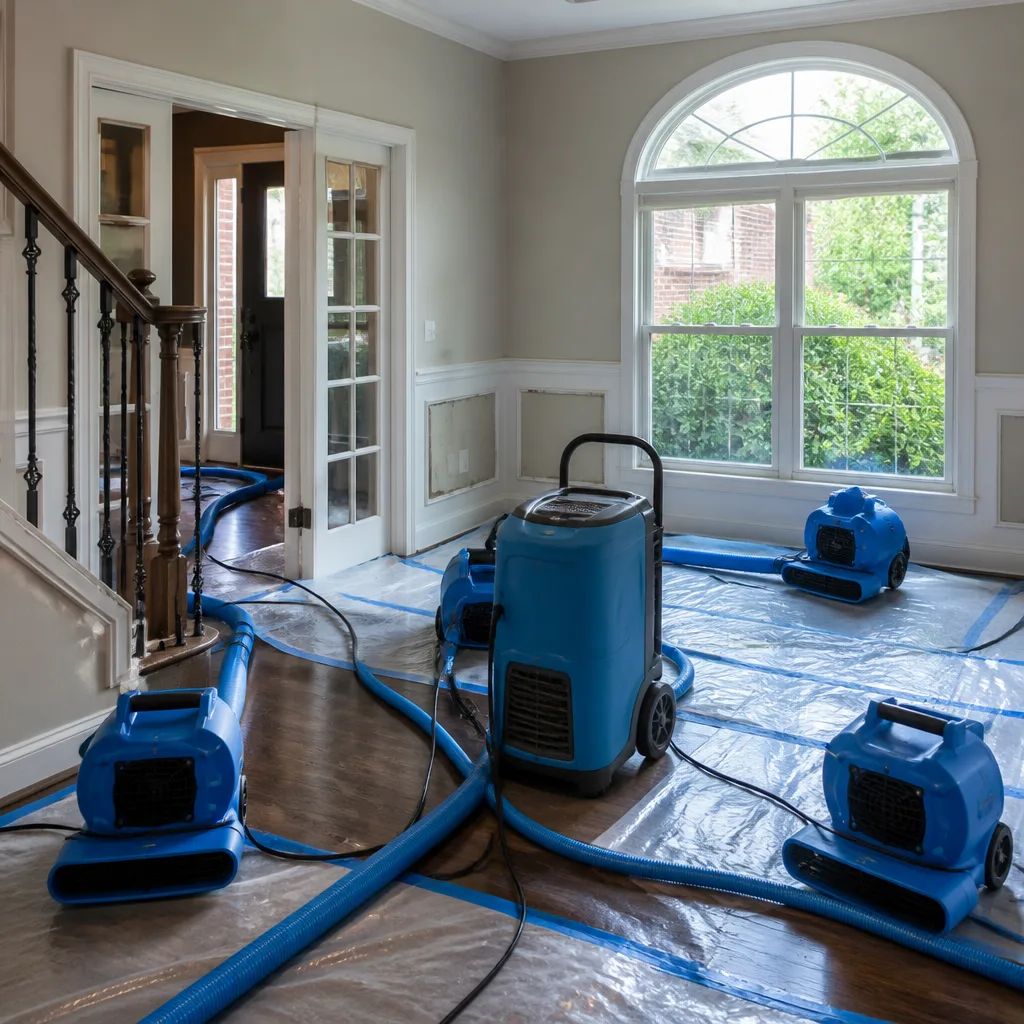

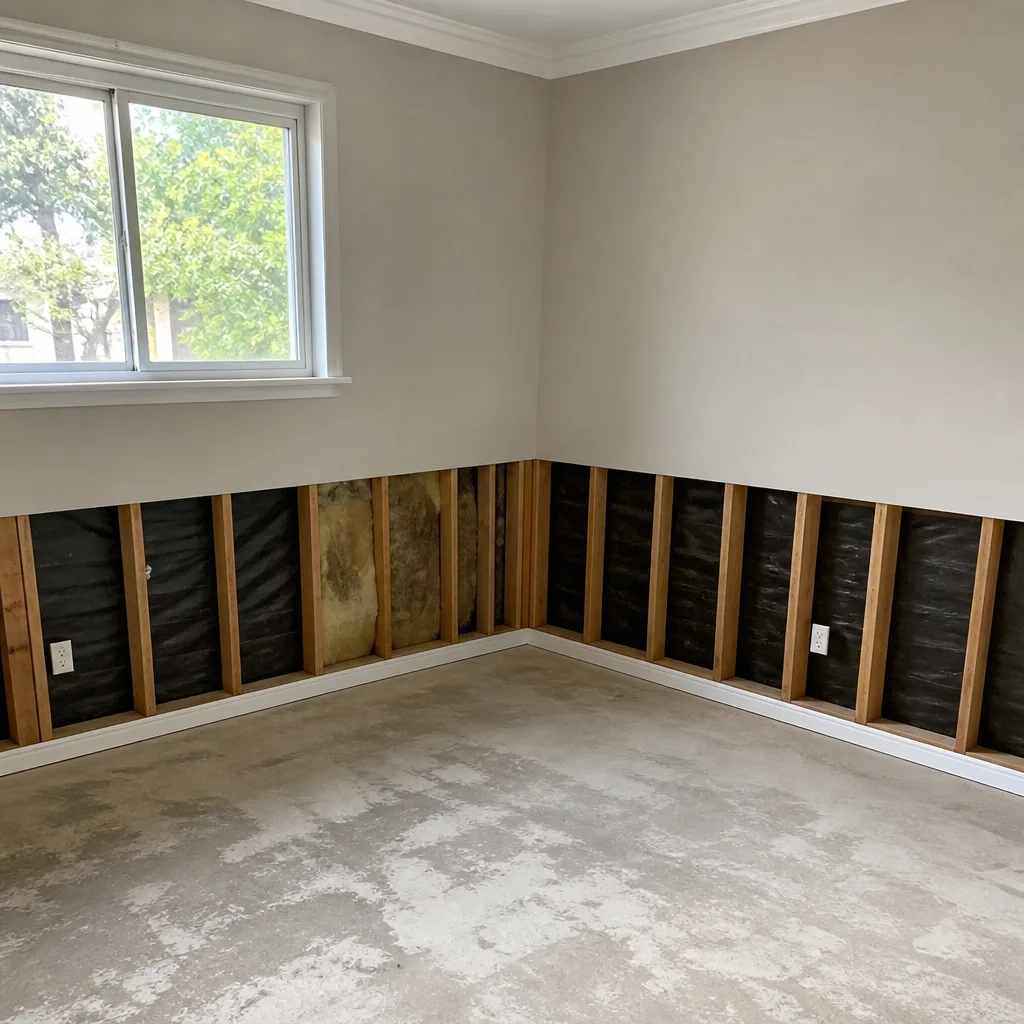

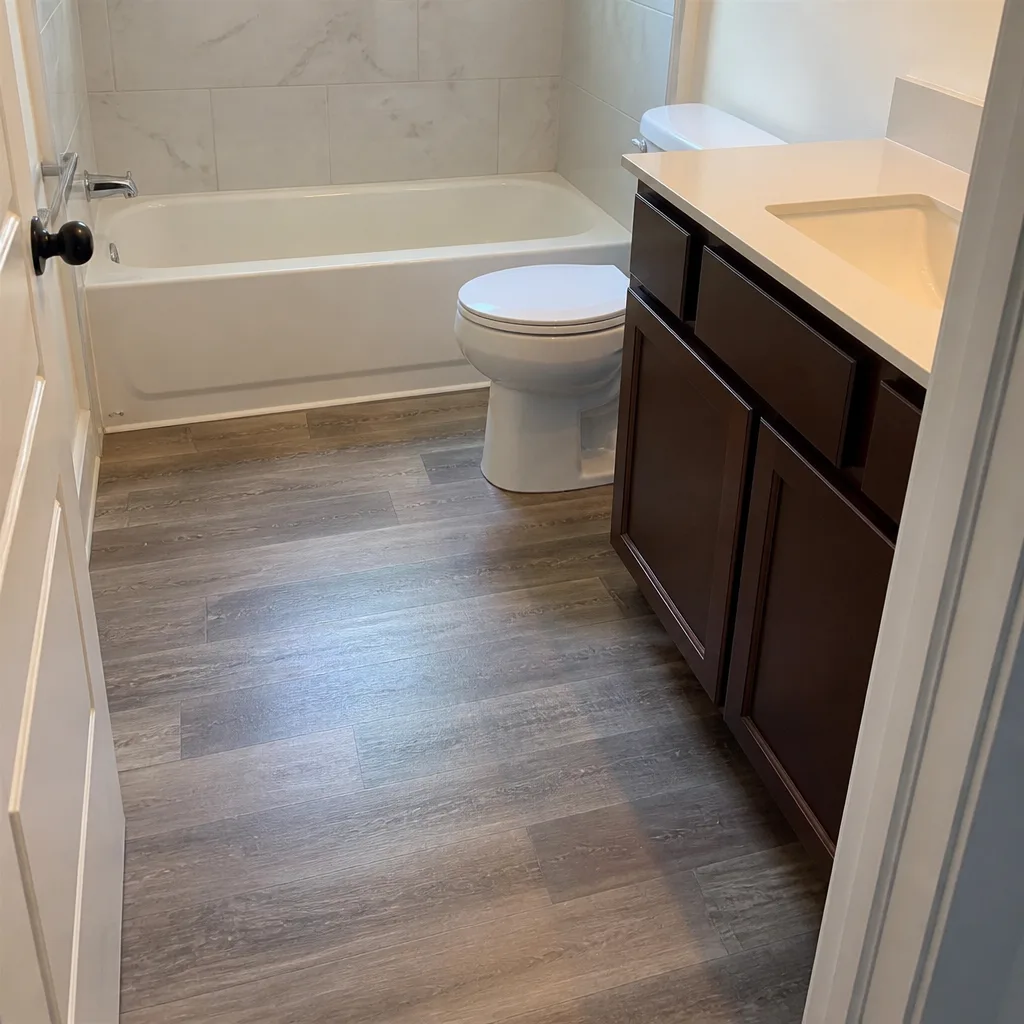

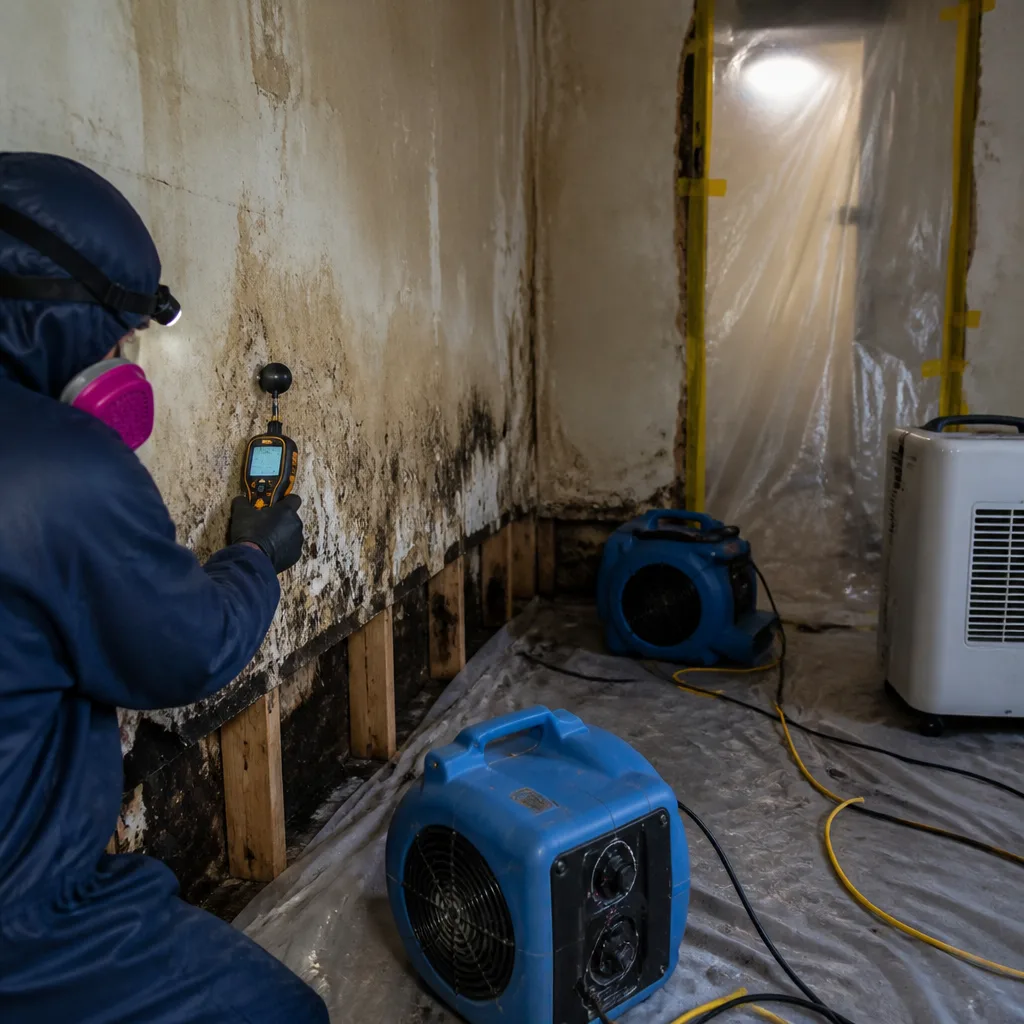 Before
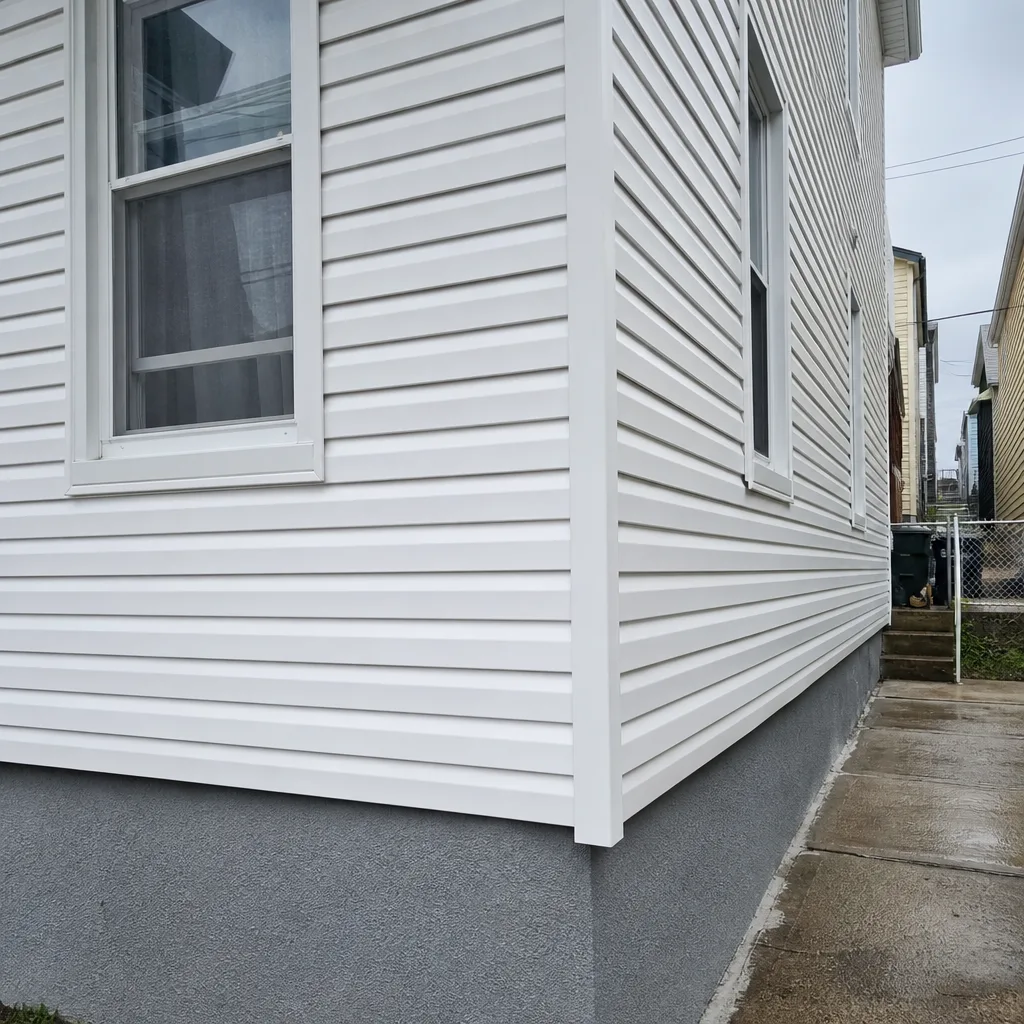 After
After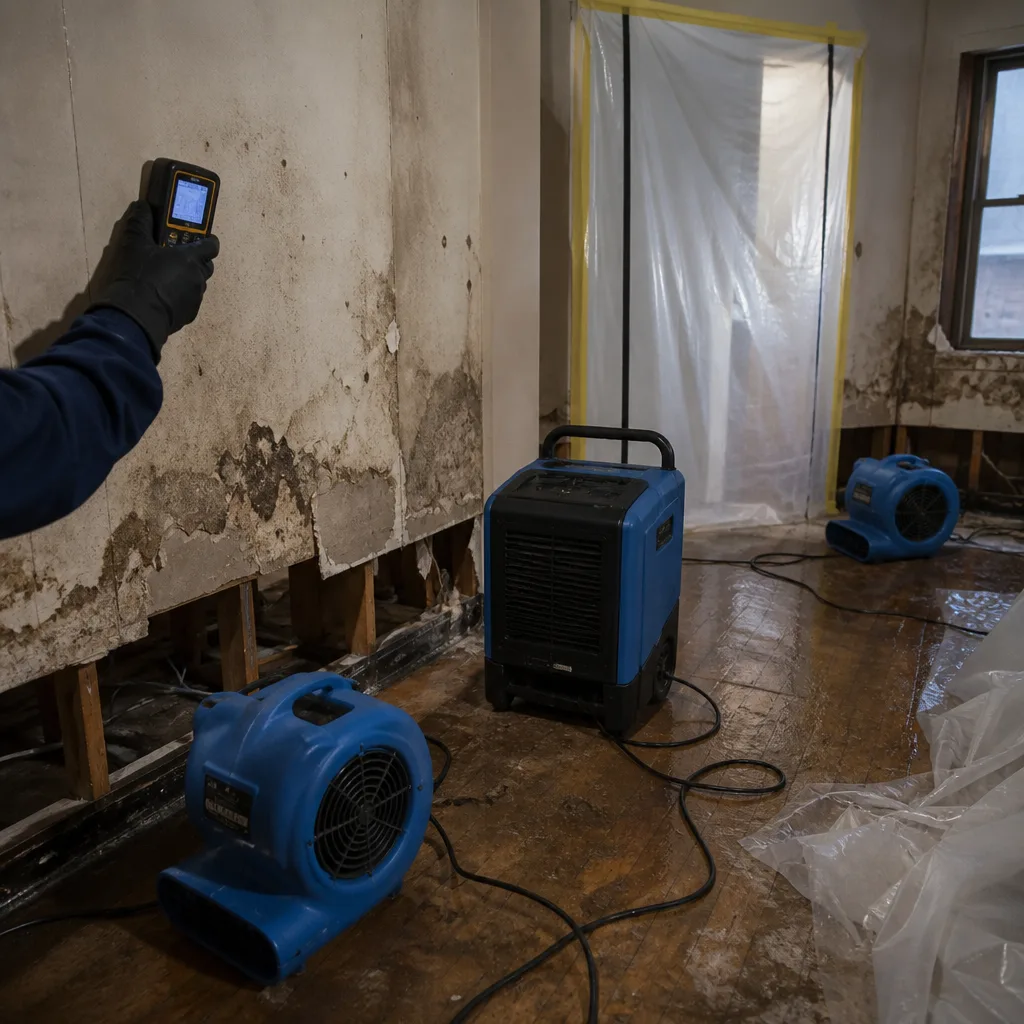 Before
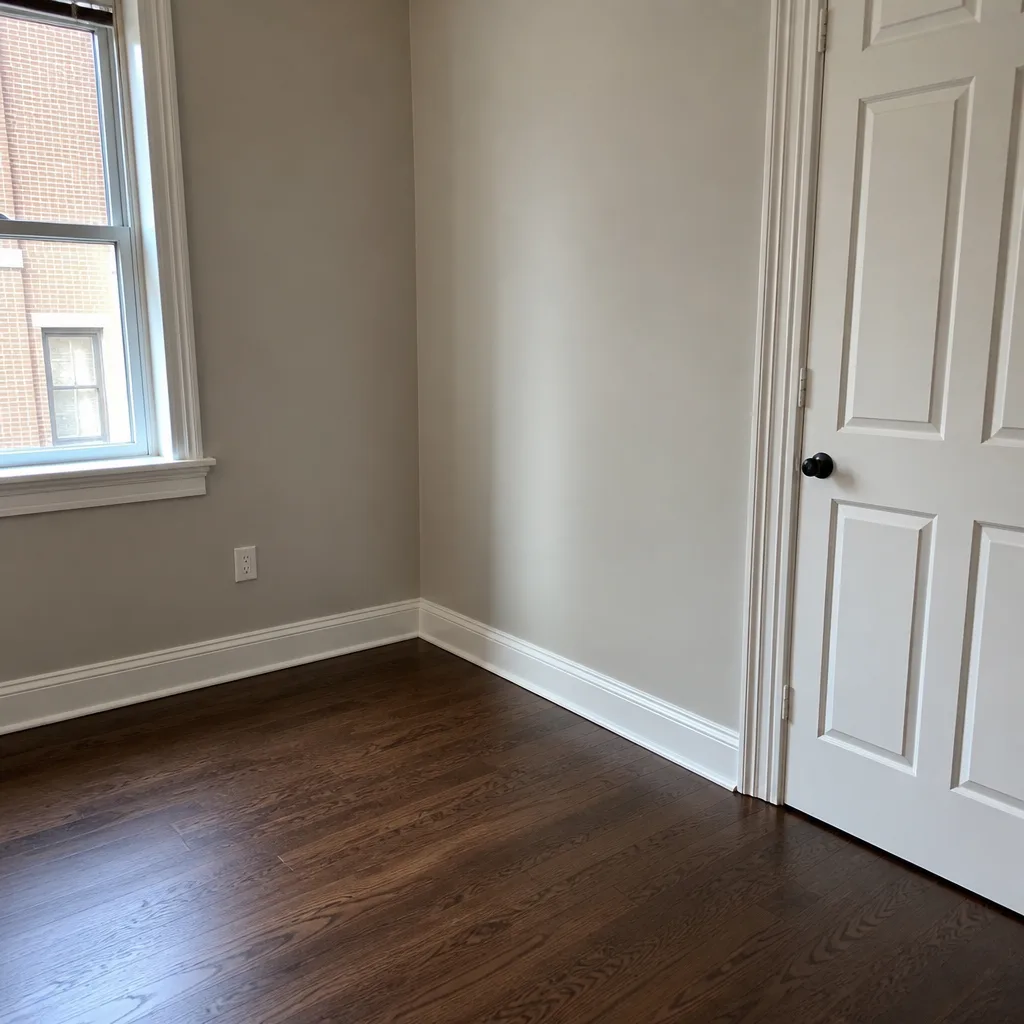 After
After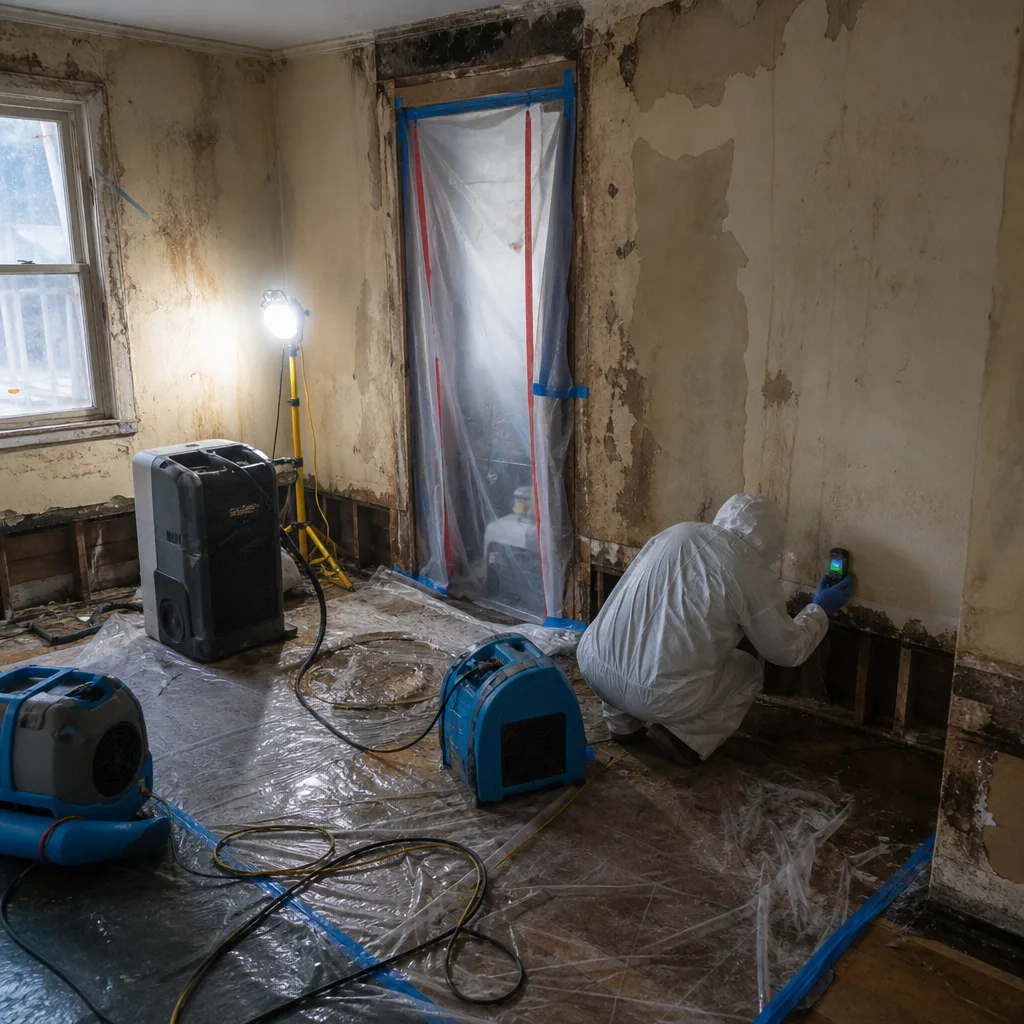 Before
 After
AfterDIY vs Professional Damage Restoration: The East Bronx Homeowner’s Decision Guide
Roughly half of the water damage claims we walk into in East Bronx started as a homeowner’s weekend project. A supply line lets go under the kitchen sink on a Friday night, the homeowner pulls out a shop vac and some box fans, and by Tuesday the baseboard is swelling and there’s a musty smell coming from the wall cavity. The damage itself usually isn’t the expensive part. The expensive part is what happens in the 72 hours after the water stops flowing, when moisture trapped in drywall, subfloor, and framing feeds mold growth you can’t see yet. This guide will walk you through what’s genuinely safe to handle yourself, what isn’t, what East Bronx homes face specifically, and how to tell the difference before you’re too far in to turn back.
Quick Answer
DIY makes sense for small, contained water spills you catch immediately and can dry within 24 hours with good airflow. It does not make sense for water that has saturated drywall, flooring, or wall cavities, any amount of sewage or contaminated water, any fire or smoke damage, or any mold growth larger than about ten square feet. In East Bronx, where housing stock skews older and basements sit below the water table, the line between a DIY job and a professional one gets crossed faster than most homeowners expect.
Table of Contents
- The Honest Math: When DIY Actually Saves Money
- What DIY Can Safely Handle
- What DIY Cannot Handle (And Why)
- East Bronx Homes: Age, Basements, and the Water Table
- The Equipment Gap: What Professionals Bring That You Can’t Rent Cheaper
- The Insurance Reality: Documentation, Direct Billing, and Your Claim
- Step-by-Step: The DIY Water Spill Response
- Step-by-Step: What a Professional Restoration Actually Looks Like
- Common Mistakes to Avoid
- When to Call a Professional
- Frequently Asked Questions
- The Bottom Line
The Honest Math: When DIY Actually Saves Money
Let’s talk numbers, because the decision usually comes down to a spreadsheet. A burst supply line that gets shut off within minutes and only wets a few square feet of tile floor will cost you maybe $40 in towels, a fan you already own, and a few hours of your time. That’s a clear DIY win. But here’s the math on the other side. A Category 2 water loss, gray water from a washing machine overflow or a sump pump failure, that soaks into drywall, baseboards, and a plywood subfloor is not a drying problem. It’s a demolition and controlled drying problem. If you skip the demolition, you’re leaving wet gypsum and wet wood behind finished surfaces. Mold colonies establish in 48 to 72 hours in the warm, dark, humid conditions inside a wall cavity. The cost to remediate mold in even one room of an East Bronx home runs from $1,500 to $6,000 depending on how far it’s spread. Compare that to the cost of professional extraction and drying on day one, which typically runs $2,500 to $4,500 for a single-room water loss, and the DIY “savings” vanish the moment mold appears. The honest math says DIY only saves money when the water never touched anything porous. Once drywall, subfloor, or carpet padding is involved, the clock is running and the professional bill is already smaller than what inaction costs.
What You’re Actually Paying For With a Pro
It’s easy to look at a restoration invoice and think you’re paying for labor. You’re not, mostly. You’re paying for moisture mapping, which tells the crew where the water went that you can’t see. You’re paying for commercial drying equipment that moves 3,000 to 5,000 cubic feet of air per minute, not the 200 CFM a box fan manages. You’re paying for a daily moisture log that documents the dry standard was met, which is the single most important piece of paper if an adjuster starts asking questions. And you’re paying for the written guarantee that if it isn’t done right, someone comes back and makes it right without a fight. DIY has none of that. When a homeowner’s dry job fails, the only guarantee is that the mold will find the moisture.
What DIY Can Safely Handle
We’re not going to tell you everything needs a truck roll. That’s not honest, and it’s not how we do business. There are situations where a homeowner in East Bronx can handle the response without calling anyone. Here’s the short list:
- Small clean-water spills on non-porous surfaces. A glass of water on tile, a pot overflowed onto linoleum. Wipe it up, air it out, done.
- A puddle from a known source you fixed immediately. If the toilet tank cracked, you replaced the fill valve, and the water never left the bathroom tile, you’re fine.
- Condensation on pipes or windows. This is a humidity issue, not a water damage event. Dehumidify, insulate, move on.
- Wet items that can go straight into the wash or the trash. Towels, bath mats, a small area rug that wasn’t sitting on hardwood.
The common thread is this: the water was clean, the surface was non-porous, and the water was gone within the hour. If those three things are true, a homeowner can handle it with a mop and a fan. If any one of them is false, the situation is already bigger than the toolbox.
The 24-Hour Rule
Here’s the simplest decision rule we know: if everything wet can be bone-dry within 24 hours using what you already own, DIY is reasonable. If not, the moisture is working its way deeper every hour. In East Bronx summers, the outdoor humidity alone can keep a damp wall cavity from drying for weeks. Box fans don’t remove moisture from the air. They just move it around. Once the air in the room is saturated, which happens fast in a closed-up Bronx apartment or a below-grade basement, evaporation stops. That’s why dehumidification matters more than airflow, and why a homeowner’s setup usually fails the 24-hour test.
What DIY Cannot Handle (And Why)
This is the part where we get direct, because sugarcoating this gets people hurt and costs them money. There are damage categories where DIY is not just a bad idea. It’s dangerous.
Category 2 and Category 3 Water
Water damage professionals classify water into three categories. Category 1 is clean water from a supply line or a faucet. Category 2 is gray water, which means it contains some contamination. Washing machine discharge, sump pump failures, toilet overflow with no solid waste. Category 3 is black water, which is sewage, floodwater from rivers or streets, or any water that sat long enough to grow bacteria. You cannot tell by looking at the water which category it is, and you should not try. Gray water can carry bacteria that cause gastrointestinal illness. Black water carries pathogens that cause serious infections. If the water came from a drain line, a toilet, a sump pit, or the street, it is a biohazard. Do not touch it. Do not try to dry it. Call a professional who has the PPE, the disinfectants, and the training to handle it. In East Bronx, where storm sewer backups happen in the older combined-sewer neighborhoods during heavy rain, this is not a hypothetical.
Mold Remediation
Mold is a living organism that reproduces by releasing spores into the air. The minute you start scrubbing visible mold without proper containment, you’re aerosolizing those spores and sending them into every room of the house. Professional mold remediation in East Bronx involves negative air pressure containment, HEPA filtration, and removal of contaminated porous materials. It’s not a bleach job. If you see mold covering more than about ten square feet, or if you smell mold but can’t see it, the growth is already behind walls or under flooring where DIY can’t reach it. The EPA recommends professional remediation for any mold growth larger than ten square feet. That’s a two-foot-by-five-foot patch. Not big. But big enough to be beyond DIY.
Fire and Smoke Damage
Fire damage restoration is not cleaning soot off a wall. Smoke is chemically complex. Different materials burn and release different residues: protein smoke from food fires leaves a nearly invisible film that stinks for months; synthetic smoke from plastics and upholstery leaves a greasy residue that smears when you wipe it; fuel oil soot is a health hazard. Professional restoration uses chemical sponges, specific pH-balanced cleaners, thermal fogging, and ozone treatment, in controlled stages. Get the order wrong and you seal the odor into the surfaces permanently. Additionally, fire-damaged structures often have hidden hazards: compromised wiring, weakened framing, and particulate that should not enter your lungs. This is not a DIY category, ever.
Structural Drying and Rebuild
Once water has saturated drywall, subflooring, or structural framing, the only correct response is to remove the wet material to the dry line and dry the structure mechanically. This means cutting out drywall, pulling up flooring, drilling weep holes where needed, and running commercial air movers and dehumidifiers for days. It means moisture readings taken daily until the dry standard is met. And then it means putting the room back together: new drywall, tape, mud, paint, flooring. That’s a construction project, not a cleanup. Most East Bronx homeowners don’t have the tools, the knowledge, or the time to do this correctly. And the insurance company, if it’s covering the loss, expects documentation and professional drying logs. A homeowner-dried structure with mold six months later is a denied secondary claim waiting to happen.
East Bronx Homes: Age, Basements, and the Water Table
East Bronx housing stock is not like new construction in Westchester or Long Island. Much of the housing in neighborhoods like Pelham Bay, Country Club, Throggs Neck, Morris Park, and City Island was built between the 1900s and the 1960s. That means plaster and lath walls, balloon framing in some older buildings, cast iron drain pipes at or past their useful life, and basements that were never designed to be finished living space. These homes have specific vulnerabilities that a homeowner on a DIY forum in Arizona isn’t dealing with.
Plaster and lath walls are a double-edged sword. Plaster is denser than drywall and slightly more water-resistant, but the lath behind it is wood, and the wall cavity is wide open. Water that enters at the top of a wall can travel down through the cavity and pool at the bottom plate, soaking the sill plate and the floor joists before you ever see a stain on the visible surface. By the time you notice the paint bubbling, the framing has been wet for days. Drywall shows damage faster, which is actually useful. Glossy latex paint over plaster can hide moisture behind it for a long time.
Basements below the water table are another East Bronx reality. The Bronx sits on bedrock with a high water table in many areas, which means hydrostatic pressure pushes groundwater up through the slab at the cove joint where the wall meets the floor. A homeowner with a mop bucket is fighting a losing battle against water that’s coming up from below. The correct response involves drainage systems, sump pumps with battery backup, and often vapor barriers. That’s not a cleanup project. That’s a waterproofing project. And it’s one of the most common calls we get from homeowners who’ve spent years trying to chase the problem themselves.
Cast iron drain pipes are the third factor. Cast iron lasts sixty to eighty years, and a lot of East Bronx plumbing is at the end of that window. When cast iron fails, it doesn’t usually burst. It cracks and weeps slowly, or a section crumbles entirely. The homeowner sees a slow dark stain spreading on the basement floor or smells sewer gas and doesn’t know why. By the time the source is visible, the contamination has usually been present for a while. Diagnosing this requires cameras, experience with local plumbing history, and access to replacement expertise.
Finally, East Bronx weather patterns matter. The humidity in July and August means drying times are longer. The nor’easters in winter mean freeze-thaw cycles on roofs that lead to ice dams. The heavy spring and fall rains stress aging gutters, leaders, and below-grade waterproofing. A homeowner who wants to DIY a water damage response is fighting the climate as well as the water. None of this is impossible. It just narrows the window of what’s realistically DIY territory.
The Equipment Gap: What Professionals Bring That You Can’t Rent Cheaper
There’s a persistent belief that restoration companies are just doing what a homeowner could do with a rental dehumidifier and a few fans from the hardware store. The belief is wrong. Here’s the actual equipment gap.
A rented dehumidifier from Home Depot pulls maybe 20 to 30 pints of water per day and moves a few hundred CFM of air. A professional-grade unit like a Dri-Eaz LGR (low grain refrigerant) dehumidifier pulls 130 to 150 pints per day in a warm wet room. A Phoenix unit can be even more aggressive. An XPOWER air mover moves 3,000 CFM. A B-Air unit offers similar performance in a smaller footprint. The difference matters because drying is a race against mold, and mold grows on a 48 to 72 hour clock. A professional setup can dry a saturated room in three to four days. A homeowner setup takes two to three weeks, and by then the mold has already won.
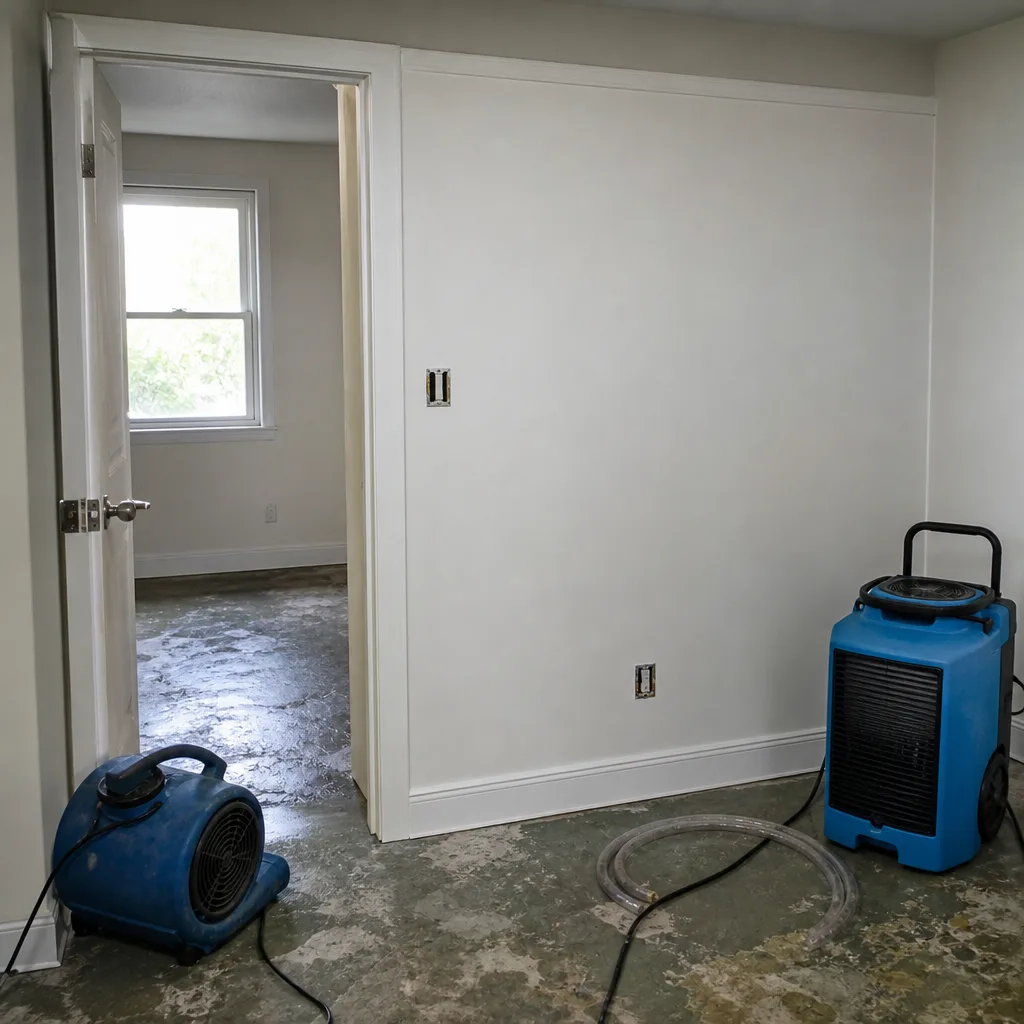
There’s also the matter of what you can’t see. Professional restoration starts with a moisture map, not a mop. Technicians use penetrating and non-penetrating moisture meters to find where the water went inside walls, under cabinets, and beneath flooring. The map tells the crew where to drill, where to cut, and where to place equipment. Without a moisture map, a homeowner is guessing. And guessing wrong means leaving wet material in place, sealing it up, and discovering the problem months later when the mold smell appears.
For hard-to-reach cavities, systems like Injectidry push dry air into wall and ceiling cavities under pressure, drying the inside of a wall without removing every section of drywall. That’s specialized equipment, not something you can rent, and it changes the economics of the job because it means less demolition and less reconstruction. That’s a real cost difference, but it runs in the professional’s favor, not the homeowner’s.
The Insurance Reality: Documentation, Direct Billing, and Your Claim
Homeowners insurance covers sudden and accidental water damage, but it doesn’t cover neglect. That’s the line every adjuster is looking for. If a pipe bursts and the homeowner calls a restoration company on day one, the claim is clean. If the homeowner tries to dry it themselves, fails, and calls on day ten because mold is appearing, the adjuster’s first question is why a professional wasn’t contacted sooner. The second question is whether the mold was caused by the original water event or by the homeowner’s delay. These claims get challenged, reduced, or denied all the time.
The professional documentation matters because it proves the response was appropriate and timely. A restoration company produces a daily moisture log showing the initial readings, the drying progress, and the eventual dry standard. That log goes to the carrier. If a dispute comes up later, the log is the evidence. A homeowner with a Home Depot receipt and some photos from their phone has none of that. And if the claim involves reconstruction after the drying is done, the carrier wants a scope of work from a qualified contractor, not a homeowner’s estimate of what they think it’ll cost to patch the drywall.
The other reality is billing. A professional restoration company with direct insurance billing handles the paperwork with the carrier directly. The homeowner never plays messenger between the restoration company and the adjuster. That’s not a small thing. The average East Bronx homeowner is not a claims specialist, and the claims process after a major water loss is a full-time job for weeks. Professional restoration companies in East Bronx deal with adjusters every single day. They know what the carrier will pay for, what documentation the carrier requires, and how to present the claim so it gets paid. That experience is part of what you’re paying for, and for most homeowners it’s worth more than the deductible.
We’ve seen this from both sides. The homeowner who calls us on day one with a burst pipe usually has their claim paid and their house dried and rebuilt within weeks. The homeowner who calls us on day ten with mold in the baseboards usually has a fight. The water line on the wall tells the story. The earlier you respond, the cheaper the claim, the better the outcome, and the stronger the documentation.
Step-by-Step: The DIY Water Spill Response
If you’re certain the situation is a small, clean-water spill you caught immediately, here’s the correct sequence. Follow it in order and stop if you hit a step you’re not sure about.
- Stop the source. Shut off the water at the fixture, the appliance valve, or the main shutoff. You can’t dry anything while water is still entering.
- Remove standing water. Use a wet/dry shop vac if you have one. Towels and mops work if the volume is small. Get the surface water up before it soaks further.
- Remove wet porous items. Rugs, towels, bathmats, cardboard boxes, anything fabric or paper that’s wet. These go outside or into trash bags. They will not dry indoors.
- Establish airflow. Point every fan you own at the wet area. Open windows if the outdoor air is dry. Cross-ventilation matters more than fan count.
- Dehumidify if possible. If you own a dehumidifier, run it in the affected room with the door closed. Empty the bucket regularly. If you don’t own one, air conditioning helps.
- Check for hidden moisture. After 24 hours, check for dampness in drywall, under baseboards, under flooring edges. If anything still feels damp, your DIY window has closed. Call a professional.
- Sanitize the surface. Once everything is dry, clean the affected area with an appropriate cleaner. Clean water on tile is low risk, but it’s cheap insurance.
That’s the complete DIY playbook. Notice what’s not on it: cutting into drywall, pulling up flooring, spraying bleach on mold, or trying to dry inside a wall cavity. The moment the water enters a space you can’t see, you’re no longer doing damage control. You’re doing delayed professional response, and the bill is growing.
Step-by-Step: What a Professional Restoration Actually Looks Like
If you’ve never seen professional restoration in action, the process might surprise you. It’s methodical, it’s documented, and it’s faster than most homeowners expect. Here’s the sequence, the way Floodline Restoration Co. runs it in East Bronx.
- Initial assessment and moisture mapping. A certified technician arrives, inspects the damage, and uses moisture meters to map where the water has traveled. The map drives every decision that follows.
- Extraction. Standing water comes out first. Truck-mounted or portable extraction units pull water from floors, carpets, and hard surfaces. The faster the water is gone, the less it soaks into structure.
- Containment and safety. If the water is contaminated, the crew establishes containment barriers and uses PPE. If electrical hazards are present, power is cut to the affected area.
- Demolition to the dry line. Wet drywall, baseboards, and flooring are removed to expose the wet framing and wall cavities. This is not optional. You cannot dry what you cannot reach.
- Equipment placement. Professional air movers and dehumidifiers are placed according to the moisture map. Dri-Eaz, Phoenix, XPOWER, and B-Air units are standard on our jobs because they move the volume of air required to hit the dry standard in days, not weeks.
- Daily monitoring. A technician returns daily to take moisture readings, adjust equipment placement, and log progress. The log goes to the homeowner and the insurance carrier.
- Final readings and equipment removal. When the moisture readings confirm the dry standard is met, the equipment comes out. The homeowner gets the complete moisture log.
- Reconstruction. The same company that dried the structure now rebuilds it. Drywall, paint, flooring, trim. No mid-job handoff to a different contractor with a different schedule and a different warranty.
That last point matters more than most homeowners realize. The industry standard is to split restoration and reconstruction between different companies. The homeowner gets dry, then plays project manager coordinating a general contractor, an insurance adjuster, and a stack of invoices. The alternative is keeping the job whole: same crew, same warranty, one point of accountability. That’s the way we’ve operated since 2010, and it’s the way East Bronx homeowners tell us they prefer it.
What does the whole process cost? For a typical single-room water loss in East Bronx, extraction and drying run $2,500 to $4,500. Reconstruction adds to that depending on the finishes. A full basement flood with sewage contamination can run $10,000 to $25,000 or more. These are real numbers, not lowball teaser quotes, and they’re what insurance policies are designed to cover when the damage is sudden and accidental.
Common Mistakes to Avoid
- Waiting to see if it dries on its own. It won’t. Water inside a wall cavity in an East Bronx summer won’t dry on its own for weeks, and the mold clock runs out in 48 to 72 hours. Waiting is the most expensive mistake on this list.
- Using bleach on visible mold. Bleach kills surface mold but doesn’t penetrate porous materials, and it doesn’t address the moisture that caused the growth. Worse, bleach fumes are a respiratory hazard. Mold remediation requires removal and HEPA filtration, not a spray bottle.
- Running a residential dehumidifier and calling it done. A residential unit pulls a fraction of the moisture a professional LGR unit pulls. The math doesn’t work. By the time the room is dry, the framing behind the drywall has already hosted mold growth.
- Hiding damage from the insurance company. Homeowners sometimes delay filing a claim, thinking a small loss will raise their premiums or that they’ll handle it themselves and avoid the claim entirely. Then the mold appears and the claim becomes a fight about who caused it. File early. The adjuster is not your enemy.
- Assuming a sump pump failure is just a cleanup. In East Bronx basements below the water table, a sump failure means groundwater entry, which means the water will keep coming until the pump is replaced or the drainage is addressed. The cleanup is secondary to fixing the source.
- Ignoring the smell. A musty smell that comes and goes is a moisture problem behind a finished surface. It doesn’t go away because you bought a scented candle. By the time you can smell it, there’s a mold colony somewhere you can’t see.
- Hiring the first contractor who answers the phone without checking credentials. Restoration is a trade where fly-by-night operators appear after every big storm. In East Bronx, after major weather events, unlicensed operators go door to door. Before you sign anything, verify IICRC certification, insurance, and local references. The 90-Day Done Right Promise is a written guarantee that means the company stands behind the work. If a contractor won’t put a guarantee in writing, that tells you everything.
When to Call a Professional
Call a professional if the water came from a drain, toilet, sump pit, or the street. Call if the water touched drywall, baseboards, flooring, or any porous material. Call if you see mold larger than ten square feet or smell mold you can’t locate. Call if there was a fire, no matter how small, because smoke damage is chemically complex and hides in places you won’t think to clean. Call if the water has been sitting for more than 24 hours. Call if your insurance claim is involved and you want documentation that will hold up. Floodline Restoration Co. offers free estimates in East Bronx, and the call takes ten minutes. Reach us at (607) 602-2791 any time, day or night. A live person answers, not a recording.
Frequently Asked Questions
Professional water damage restoration in East Bronx typically runs $2,500 to $4,500 for a single-room water loss involving extraction and drying. Costs rise with the size of the affected area, the water category, and whether reconstruction is required. A full basement flood with sewage contamination can run $10,000 to $25,000 or more. Every job starts with a free assessment, so you’ll know the scope and cost before work begins. Call (607) 602-2791 for a free estimate.
Homeowner’s insurance typically covers sudden and accidental water damage, such as a burst pipe or a washing machine supply line failure. It does not cover gradual damage, neglect, or flooding from groundwater or storms unless you carry a separate flood policy. The key to a successful claim is prompt response and professional documentation. Floodline Restoration Co. bills the carrier directly and works with your adjuster so you don’t have to.
Floodline Restoration Co. answers the phone with a live dispatcher 24/7, and a certified crew can typically reach an East Bronx home within hours of the call. Extraction equipment runs the same visit, not the next day. In water damage, speed is the single biggest factor in cost and outcome. Call (607) 602-2791 any time.
If the water touched porous materials like drywall, carpet padding, or subfloor, full remediation is almost always necessary. You cannot clean moisture out of a material that has absorbed it. If the water was clean and only touched non-porous surfaces, a thorough cleaning and drying may be sufficient. The only way to know is with a professional moisture assessment, which is free. Call (607) 602-2791 to schedule one.
Restoration is the emergency response: extraction, drying, mold prevention, and sanitation. Reconstruction is putting the house back together: drywall, paint, flooring, trim. Many companies do one or the other. Floodline Restoration Co. does both, with the same crew, so there’s no mid-job handoff and no second warranty to negotiate. The 90-Day Done Right Promise covers the complete job, from first extraction to finished rebuild.
East Bronx basements flood more often than newer suburban homes for three reasons: aging cast iron drain pipes, a high water table that pushes groundwater through floor and wall joints, and older housing stock that predates modern waterproofing standards. Many East Bronx homes also sit in combined-sewer neighborhoods where heavy rain overwhelms the system and sends water back through floor drains. Fixing these issues permanently often requires drainage work, a battery-backup sump pump, or sewer line replacement, not just cleanup.
The Bottom Line
The DIY-versus-professional decision comes down to three questions. Is the water clean, and did it only touch non-porous surfaces? Can everything be bone-dry within 24 hours using what you already own? Is there any chance the water entered a wall cavity, a floor assembly, or a basement space you can’t see? If the answer to any of those is anything but yes, the professional call is cheaper than the alternative. In East Bronx, with older homes, high humidity, and basements below the water table, the margin for DIY error is thin. The best time to call is the moment you realize the water is winning. The line on the wall is where we start.
Floodline Restoration Co. is a full-cycle restoration company serving East Bronx and the surrounding neighborhoods since 2010. We answer the phone with a live person, 24/7, and we stand behind every job with the 90-Day Done Right Promise in writing. If you’re facing water, fire, mold, or storm damage, call (607) 602-2791 for a free estimate. It costs nothing to find out where you stand, and it could save you thousands.
Written by Curt Bowman, Owner at Floodline Restoration Co., serving East Bronx since 2010.